

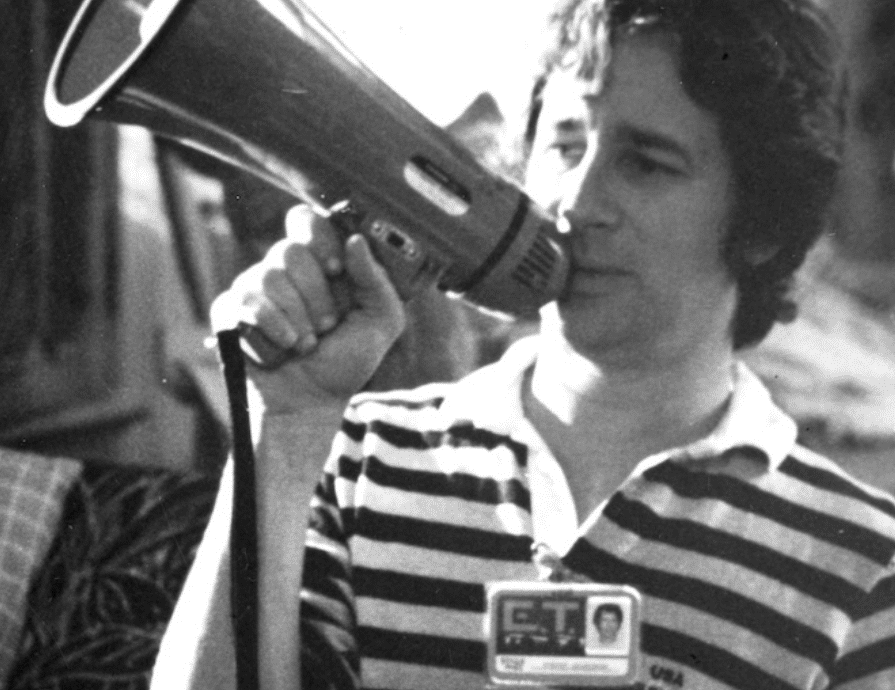
Where better to laud Steven Spielberg, an artist who has defined and redefined the theater experience throughout his career, than at CinemaCon, the annual gathering of theater owners and studios to celebrate the cinematic experience? This year, the Motion Picture Association is honoring the legendary director with a special MPA America250 Award in recognition of his unparalleled career, one that has proven the cinema’s central role in shaping America’s cultural impact at home and abroad with films that will stand the test of time.
Spielberg’s ambitions were apparent early. At 17, he made the sci-fi movie Firelight, a feature film, no less, that concerned the strange doings in an Arizona town, where unexplained lights, sudden disappearances, and a climactic third-act extraterrestrial reveal explored themes he’d revisit again, specifically in Close Encounters of the Third Kind, his 1977 masterpiece. The precocious filmmaker made a two-hour, twenty-minute film a year after he was legally able to drive, on a budget of about $500.
A career as successful and seemingly charmed as Spielberg’s can seem as if it was always going to turn out this way, but very few artists are guaranteed success, and Spielberg blazed a path for himself built on risk, hard work, instinct, courage, and collaboration that only now feels like a fait accompli. Today, Spielberg stands as one of the greatest filmmakers of all time, with a filmography stacked with epics, classics, and genre-defining blockbusters, but his first massive hit required every ounce of his ingenuity and resolve.
Spielberg was 27 years old and coming off his first theatrical feature, The Sugarland Express, his 1974 film about a woman going to extreme lengths—breaking her husband out of jail and kidnapping their son—to reunite her family. The film was a critical hit but flopped at the box office, and he found himself a director-for-hire without a proven hit film to his name. It was while working on post-production of The Sugarland Express that he saw a galley proof of a novel by Peter Benchley on the desk of producers Richard Zanuck and David Brown. The novel was called “Jaws.”
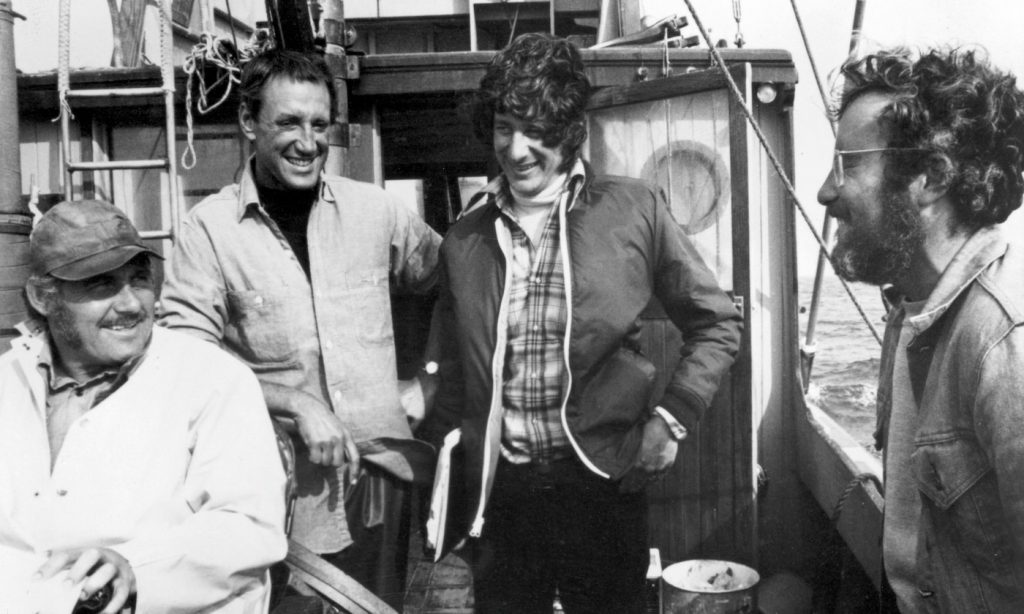
Spielberg felt he could make this movie, but he was young, and the producers weren’t convinced. So first, they approached director John Sturges, the helmer behind classics like The Magnificent Seven and The Great Escape, and, perhaps even more crucially, the oceanic epic The Old Man and the Sea. Sturges ultimately declined. Then they nearly hired Dick Richards, whose 1972 directorial debut The Culpepper Cattle Co. displayed his deft hand with outdoor action, but Richards apparently kept referring to the great white as a “whale” during meetings, a problem that Zanuck and Brown couldn’t overlook. Spielberg kept at the producers, and, eventually, he got the gig. He then made a fateful decision: he’d shoot Jaws on the open ocean.
The problems started almost immediately. Spielberg was counting on Bruce, a mechanical animatronic great white shark built by designer Joe Alves, to be the star of his film. Bruce was 25 feet long and weighed nearly a ton, and required a team of 40 technicians to handle. The details of what happened during the production of Jaws are one of cinema’s most enduring origin stories. Spielberg and his team had planned to use Bruce much more in the finished film; the script and early storyboards envisioned the titular man-killer visible during multiple attacks, but Bruce had only been tested in freshwater. Once he was deployed in Martha’s Vineyard’s saltwater, his pneumatic systems began to fail due to electrolysis, frame fractures, saltwater intake, and bloating.
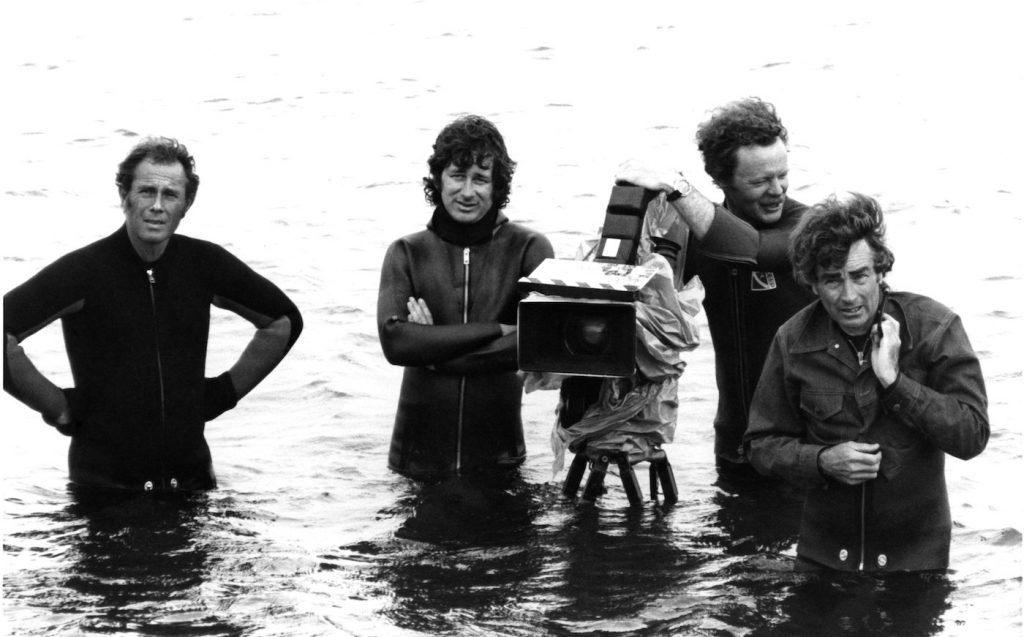
Bruce’s breakdowns caused the budget to balloon from $4 million to $9 million. The shooting schedule tripled in length, from 55 days to 159 days. Studio executives, Benchley, and the cast were concerned, to put it mildly. So was Spielberg.
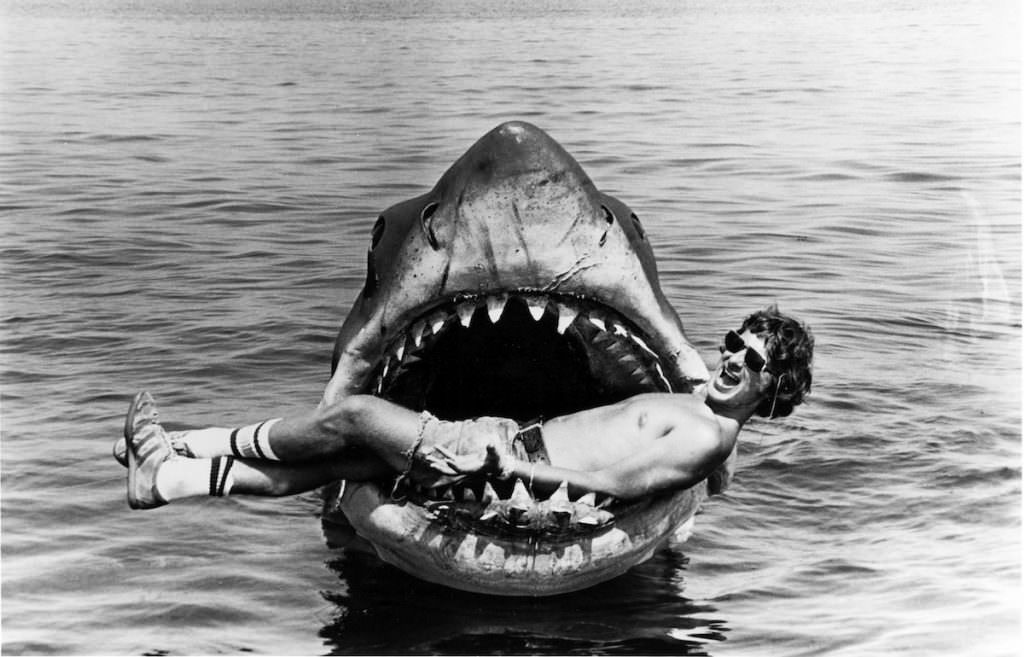
If Jaws flopped, Spielberg’s career could have been in serious jeopardy. The resulting glitching great white was on screen for less than four minutes, yet Spielberg made the most of his considerable instincts for building unbearable tension and relied on the score by his masterful composer, John Williams, to create a far more terrifying film. Less was indeed more. It turned out all viewers needed to imagine the shark’s approach and inevitable frenzy was Williams’ two-note ostinato, played on low bass strings and woodwinds, soft and distant to start, accelerating as the monster neared. Jaws went on to gross $476 million (that’s $2 billion in today’s dollars), and the young director essentially invented the summer blockbuster in the process. The success of Jaws gave Spielberg the momentum he needed to make a string of movies that kept redefining genres and the movie-going experience—Close Encounters of the Third Kind in 1977, a beloved personal project dating back to Firelight, Raiders of the Lost Ark in 1981, and then the project of his dreams, E.T., the Extra-Terrestrial in 1982, cementing him as one of the most bankable, brilliant directors of his generation.
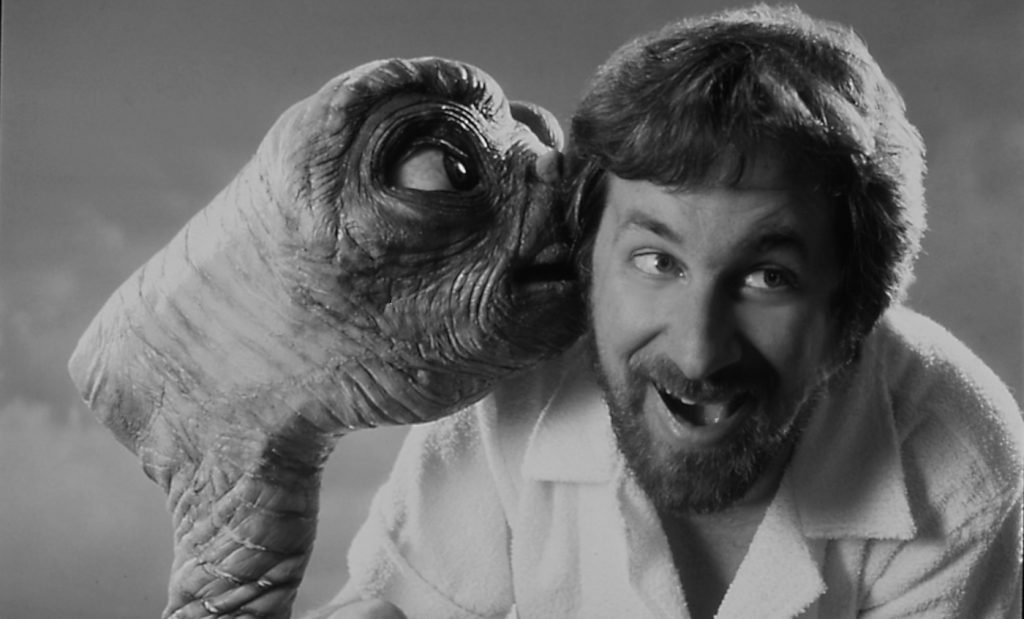
Spielberg has been a pioneer many times over, yet you might not have known that he was the main driver behind the PG-13 rating, suggesting that what audiences and the film world needed was a rating that would be PG “with a little hot sauce on top.” The idea that a film could inspire, enthrall, and even scare the whole family would change the industry. While director John Milius’s Cold War-era Red Dawn was technically the first film rated PG-13 (released on August 10, 1984), it was on account of Spielberg’s Indiana Jones and the Temple of Doom, released a few months earlier in May, and Joe Dante’s Gremlins, which Spielberg produced and that bowed in June, that the rating was devised. Those two films were considered too dark for general audiences (PG); it turns out parents were not enthused about their children watching a gremlin exploding in a microwave, or the moment in The Temple of Doom when the High Priest Mola Ram (Amrish Puri) plunges his hands into a man’s chest and rips out his still-beating heart. Spielberg’s intuition about a sweet spot for films that would appeal to older kids who found PG too tame would go on to shape the blockbusters he and other filmmakers would create for generations.
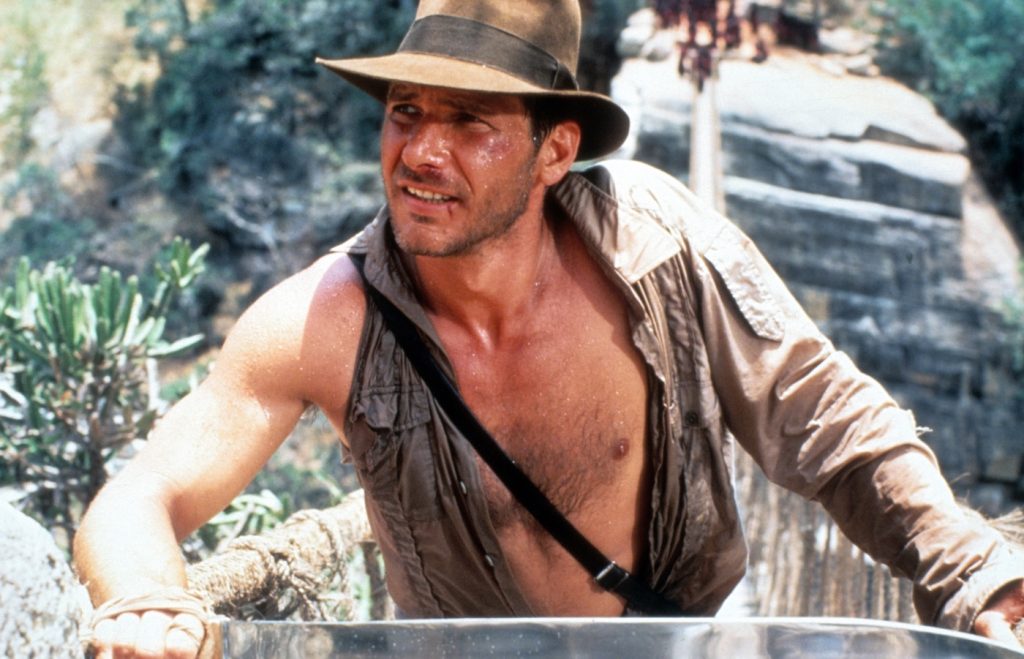
Spielberg has owned the PG-13 rating ever since, directing 17 films with the distinction and exploring nearly every genre in the process. His sci-fi adventure films include the game-changing Jurassic Park (1993), Minority Report (2002), and War of the Worlds (2005), with his upcoming Disclosure Day signaling his return to the genre after an eight-year hiatus since 2018’s Ready Player One. His action-adventure films in the category include Indiana Jones and the Last Crusade (1989) and The Lost World: Jurassic Park (1997). His dramas include historical powerhouses like The Color Purple (1985), Lincoln (2012), Bridge of Spies (2015), and The Post (2017). His caper Catch Me If You Can (2002) was PG-13, as was his brilliantly executed musical West Side Story (2021). He even worked in the hot-sauce mold for his semi-autobiographical film The Fabelmans (2022).
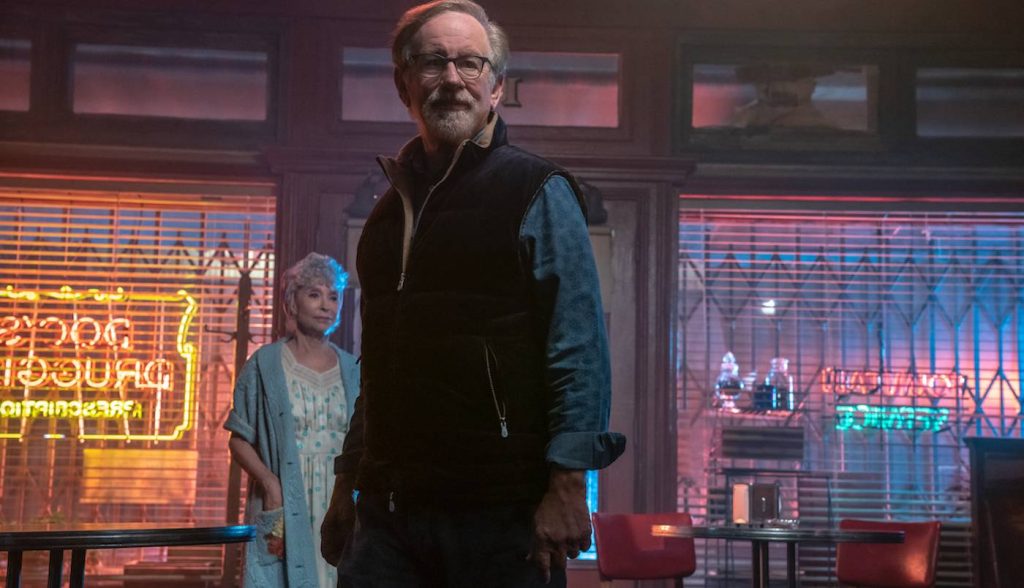
Spielberg has not shied away from darker material for mature audiences. Two of his masterpieces are 1993’s heartbreaking Schindler’s List and 1998’s harrowing Saving Private Ryan. The former won seven Academy Awards, including Best Picture and Best Director. The latter won five Academy Awards, including, again, for Best Director. Best Picture that year went to Shakespeare in Love, a decision that has not aged any better than it appeared in real time.
Spielberg is in Las Vegas not only to accept the MPA America250 Creator Award, of course, but also to promote Disclosure Day. On June 12, audiences will once again be lured back into the theater by one of the modern masters, an artist who has reshaped the way we experience films and pushed the limits of what they can do. And while the technical mastery of his craft is unquestionable, he has always been one of the most humane artists, whether it’s filming from a child’s perspective, a framing device he has made entirely his own in films like Close Encounters, E.T., and more, or reminding us of the cost of turning away from the better angels of our nature. He has long been one of our greatest American-born artists and exports, rightly cherished at home and abroad for conjuring an emotion that perhaps no other medium can match in quite the same way, and one he’s conjured more than anyone else—awe.
Featured image: Photograph of Steven Spielberg (1946-) an American director, producer, and screenwriter, during the filming of E.T. the Extra-Terrestrial. Dated 20th Century. (Photo by: Universal History Archive/Universal Images Group via Getty Images)
This article was originally published on The Credits